
Empowering Livestock Farmer Groups Through Technical Assistance in the Processing of Fiber-Based Feed for Ruminants
Article Sidebar
Main Article Content
Abstract
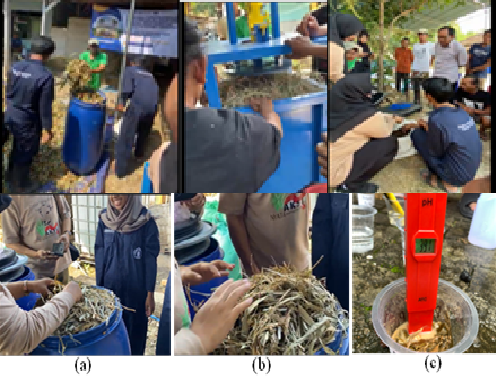
Technological innovations in fiber feed processing for ruminants play a crucial role in enhancing the efficiency of local resource utilization, particularly in supporting sustainable livestock practices. The Gembalang Livestock Group in Widang District, Tuban Regency, faces challenges in optimizing the abundant availability of local fiber feed materials, which have not been effectively utilized to support livestock productivity. The innovation in fiber feed processing aims to improve the nutritional quality of feed provided to ruminants through techniques such as fermentation, ensiling, and nutrient densification. This community engagement initiative involved the implementation of fiber-based feed processing technologies, including urea ammoniation of rice straw, preservation of fresh forages through silage using mobile silos, and the production of complete feed based on locally available materials. This approach is expected to enhance feed conversion efficiency, improve livestock productivity, and reduce greenhouse gas emissions. Moreover, this innovation supports a circular economy model by utilizing organic waste as a sustainable feed source. The results of this technology implementation indicate increased activity within the Gembalang Livestock Group, supported by the provision of equipment for rice straw ammoniation, silage production, and complete feed formulation. The ammoniated rice straw exhibited a softer texture and improved nutrient quality. Silage production from grasses also yielded favorable results, notably ensuring the availability of green forage during the dry season. Overall, these innovations have successfully improved fiber feed quality, enhanced nutritional balance, and positively impacted animal health. The implementation of fiber feed processing technologies within the Gembalang Livestock Group is also expected to improve farmers’ welfare by increasing livestock production outputs, while contributing to national food security and environmental conservation