
Comparison of Lactic Acid Bacteria Counts in the Duodenum and the Performance of Broiler Chickens Supplemented with Synbiotics and AGP
Article Sidebar
Main Article Content
Abstract
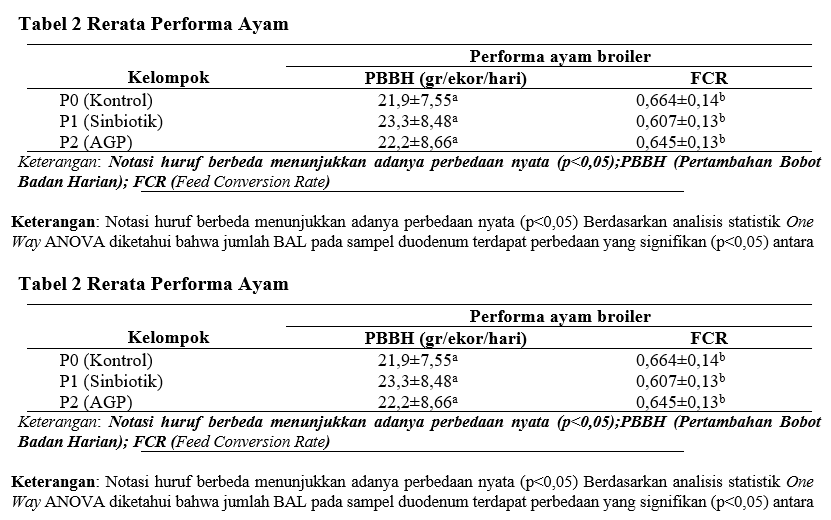
The use of Antibiotic Growth Promoters (AGPs) in poultry feed can eliminate pathogenic bacteria but may also contribute to the development of bacterial resistance to antibiotics. This study aimed to evaluate the performance of broiler chickens and the counts of lactic acid bacteria (LAB) in chickens administered synbiotics and AGPs. A total of 27 day-old broiler chicks were randomly assigned to three treatment groups: P0 (control), P1 (synbiotic at a dose of 0.45 mL/0.5 L of drinking water), and P2 (AGP, Amoxicillin at a dose of 0.25 g/L of drinking water), administered orally for 7 days. Body weight and feed intake were recorded over the 7-day period to assess performance. On day 7, the chickens were euthanized, and duodenal samples were collected for LAB enumeration, cultured on MRSA media. Mean performance parameters and mean LAB counts in the duodenum were analyzed using One-Way ANOVA and Tukey’s post-hoc test. LAB enumeration revealed a significant difference (p<0.05) between the synbiotic and AGP groups compared to the control group. Tukey’s test indicated that the LAB counts in the duodenum differed significantly between the synbiotic group and both the control and AGP groups. Broiler performance assessment showed no significant differences (p>0.05) among the control and treated groups. These findings suggest that synbiotic administration can increase lactic acid bacteria counts, whereas neither synbiotic nor AGP supplementation significantly affects broiler performance.